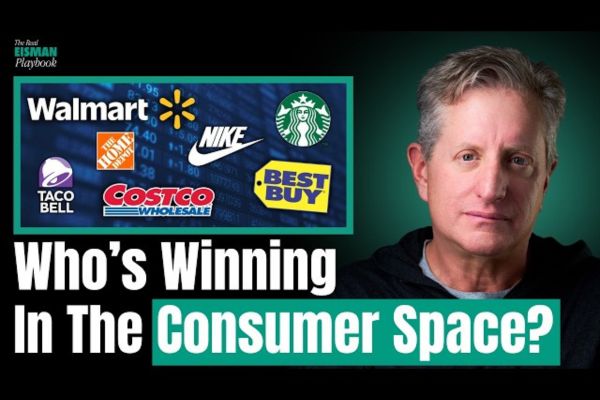
Consumer Stocks in 2026: Walmart, Nike, Starbucks & Retail Trends Explained
The health of the consumer has always been one of the most important indicators of the broader economy. When consumers spend confidently, retailers, restaurants, and brands thrive. When spending habits begin to shift, businesses feel the impact almost immediately.
In a recent discussion featuring leading retail and consumer sector analysts, several important themes emerged about the current state of the U.S. consumer. The conversation covered everything from Nike and Lululemon to Walmart, Starbucks, Home Depot, and major food companies.
The overall picture is clear: the high-income consumer remains relatively strong, lower-income consumers are under increasing pressure, and the middle-income consumer is beginning to show signs of stress. These shifts are creating both winners and losers across the consumer landscape.
Lululemon Is Losing Its Competitive Edge
For years, Lululemon was considered one of the strongest brands in athletic apparel. Customers were willing to pay premium prices because they trusted the quality, fit, and style of its products.
However, analysts believe the company is beginning to face significant challenges.
A key issue appears to be product execution. Roughly two years ago, Lululemon experienced changes within its design leadership team. Since apparel design cycles often take 18 to 24 months to reach stores, the impact of those changes is only now becoming visible.
At the same time, competitors such as Alo Yoga and Vuori have dramatically improved their offerings. Many consumers who once automatically shopped at Lululemon are now finding equally attractive—or even superior—alternatives elsewhere.
The concern isn't that Lululemon has suddenly become a bad company. Rather, its competitors have become much stronger, making customer retention more difficult than it was in the past.
Gap's Turnaround Is Real, But Old Navy Remains a Problem
One of the more surprising success stories in retail today is Gap.
After years of struggling with relevance, the company has successfully revived the Gap brand by reconnecting with its cultural roots. Strong marketing campaigns, improved merchandising, and better product selection have helped make Gap appealing again.
The challenge lies with Old Navy.
Old Navy serves a much more price-sensitive consumer base. These shoppers are increasingly focused on value and are frequently comparing prices across multiple retailers.
As a result, Old Navy faces intense competition from discount and off-price retailers such as TJ Maxx and Ross.
The encouraging news is that management believes many of Old Navy's recent problems are self-inflicted rather than economic. Leadership specifically acknowledged missing key fashion trends during the spring season and has committed to correcting those mistakes.
If they succeed, Gap could have additional upside ahead.
Nike's Problems Run Deeper Than Many Investors Realize
Few brands are as iconic as Nike.
For decades, Nike dominated athletic footwear and apparel through a combination of innovation, marketing, athlete endorsements, and strong wholesale partnerships.
Several years ago, however, the company aggressively shifted toward a direct-to-consumer strategy. Instead of relying heavily on retailers, Nike focused on selling directly through its own stores and website.
While the strategy appeared attractive on paper because it increased margins, it created unintended consequences.
By reducing its wholesale presence, Nike lost valuable visibility into customer purchasing decisions. In multi-brand stores, consumers directly compare Nike products with competitors. That competitive feedback became less visible as Nike pushed customers toward its own channels.
Meanwhile, competitors seized the opportunity.
Brands such as Hoka, On Running, New Balance, Adidas, and Salomon introduced innovative products that resonated strongly with consumers.
Hoka, in particular, has become a major force thanks to its reputation for comfort and support. Many healthcare professionals and running-store employees actively recommend the brand, creating powerful word-of-mouth momentum.
Nike has brought back experienced leadership to oversee its turnaround, but analysts believe the recovery will take longer than many investors expect.
The company remains a global powerhouse, but rebuilding market share and consumer excitement will not happen overnight.
Department Stores Are No Longer the Easy Target
For more than a decade, department stores were widely viewed as a dying retail format.
Many investors simply assumed that companies like Macy's would continue losing market share indefinitely.
That narrative may finally be changing.
Macy's has spent years reducing its store footprint, closing underperforming locations and focusing on stronger markets. The company has also improved inventory management and supply chain operations.
Bloomingdale's, one of Macy's most valuable assets, continues to perform particularly well.
While department stores are unlikely to become high-growth businesses again, analysts believe the industry has become significantly healthier than it was several years ago.
The sector may no longer deserve its reputation as retail's perpetual loser.
Starbucks' Turnaround Is Gaining Momentum
Among restaurant and beverage companies, Starbucks generated some of the most positive commentary.
The company has successfully improved customer traffic and same-store sales growth while leaning into several major consumer trends:
Wellness
Protein-based beverages
Energy products
Hydration-focused drinks
Sales growth is no longer the primary concern.
Instead, investors are now watching profitability. Starbucks has made significant labor and operational investments, and the next phase of the turnaround requires those investments to translate into stronger earnings.
If management can deliver improved margins alongside continued sales growth, Starbucks could become one of the strongest recovery stories in consumer stocks.
Chipotle Faces a Different Challenge
Unlike Starbucks, Chipotle's recovery story remains more uncertain.
The company has struggled to generate meaningful same-store sales growth, leading to a significant decline in its stock price.
However, management is actively investing in several initiatives:
New menu innovation
Enhanced loyalty programs
Improved digital marketing
Restaurant equipment upgrades
Expanded catering opportunities
Analysts believe Chipotle has the ingredients for a recovery, but investors are waiting for tangible evidence before fully embracing the story.
For now, Starbucks appears to be the safer turnaround play.
The Food Industry Faces a Perfect Storm
Perhaps the most concerning discussion centered around traditional food companies.
Many legacy food brands are battling multiple challenges simultaneously.
The Rise of GLP-1 Drugs
Weight-loss medications are changing consumer behavior.
Even individuals who are not taking these medications are becoming more health-conscious as awareness spreads.
Consumers increasingly want:
Smaller portions
Higher protein content
Greater nutritional value
The Protein Revolution
Protein has become one of the most important themes in food.
Consumers are actively seeking foods that promote satiety and support healthier lifestyles.
This trend creates problems for traditional brands built around carbohydrates, sugar, and processed foods.
Many legacy food companies now find themselves competing against newer, wellness-focused brands that better align with modern consumer preferences.
Inflation Remains a Major Challenge
Food manufacturers continue facing elevated costs across ingredients, packaging, transportation, and energy.
Passing those costs to consumers becomes increasingly difficult when shoppers are already under financial pressure.
As a result, profit margins remain under significant strain.
The Companies Under Pressure
Several household names were highlighted as particularly challenged:
Kraft Heinz
General Mills
Campbell's
Conagra
These companies continue to generate substantial revenue, but their long-term growth prospects appear increasingly uncertain.
The Bright Spots
Not all food companies are struggling.
Hershey and Mondelez were viewed more favorably because declining cocoa prices could significantly improve profitability over the next several years.
Home Depot and Lowe's Are Stuck Waiting for Housing
The home improvement industry remains heavily influenced by the frozen housing market.
Millions of homeowners currently hold mortgage rates below 3.5%.
As a result, many people are reluctant to move, limiting housing turnover and reducing renovation activity.
Despite these challenges, analysts expressed greater confidence in Home Depot than Lowe's.
The reason is simple.
Home Depot has spent years expanding its professional contractor business through acquisitions, distribution investments, and specialized services.
When housing activity eventually improves, Home Depot may be positioned to benefit more significantly than its rival.
The problem is timing.
No one expects a meaningful housing recovery anytime soon.
Walmart Continues to Win
Perhaps the biggest winner in today's retail environment is Walmart.
As consumers become more price-conscious, Walmart is attracting shoppers who previously may have preferred other retailers.
The company is also benefiting from investments in delivery infrastructure and its Walmart+ membership program.
Analysts believe Walmart+ may be approaching an important inflection point.
As same-day delivery becomes available to a larger percentage of U.S. households, Walmart gains another competitive advantage against both traditional retailers and e-commerce players.
The company's ability to combine low prices, convenience, and massive scale continues to strengthen its position.
Ralph Lauren Shows How Legacy Brands Can Adapt
While many established brands struggle to connect with younger consumers, Ralph Lauren provides a blueprint for successful reinvention.
Over the past several years, the company has:
Reduced discounting
Improved product positioning
Increased marketing investment
Elevated its brand image
Created lifestyle experiences through cafes and restaurants
Rather than chasing short-term sales, management focused on improving brand quality and desirability.
The result has been impressive.
Ralph Lauren has successfully maintained relevance with younger consumers while strengthening its appeal among affluent shoppers.
Few legacy brands have executed this transition as effectively.
Final Thoughts
The consumer landscape in 2026 reveals a market undergoing significant change.
Several clear trends are emerging:
High-income consumers remain relatively healthy.
Lower-income consumers continue to face financial pressure.
Middle-income consumers are beginning to weaken.
Protein, wellness, and health-focused products are gaining market share.
Legacy food brands face mounting challenges.
Walmart continues to benefit from consumers trading down.
Nike's recovery remains a work in progress.
Starbucks appears to be gaining momentum.
Ralph Lauren demonstrates that established brands can still reinvent themselves successfully.
For investors, these trends provide valuable insight into where consumer spending is headed and which companies are best positioned to benefit from the changing economic environment.
Until next time, this is Steve Eisman, and this has been The Real Eyes Playbook. .
If you’d like to catch my interviews and market breakdowns, visit The Real Eisman Playbook or subscribe to the Weekly Wrap channel on YouTube.
This post is for informational purposes only and does not constitute investment advice. Please consult a licensed financial adviser before making investment decisions.


