Midterm Elections, Tariffs, Fed Policy & AI: Dan Clifton's 2026 Market Outlook
Politics and financial markets are becoming more interconnected than ever. Government policies, elections, interest rates, tariffs, and artificial intelligence are all influencing investor sentiment and economic growth.
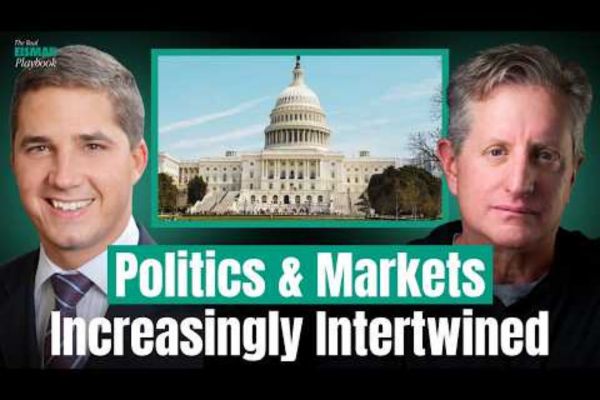
In a recent episode of The Real Eisman Playbook, political strategist Dan Clifton joined Steve Eisman to discuss the biggest issues shaping the U.S. economy and financial markets. Their conversation covered everything from the 2026 midterm elections to tariff policy, Federal Reserve leadership, AI regulation, and the road to the 2028 presidential election.
Here are the key takeaways.
Midterm Elections Could Shift Washington's Balance of Power
According to Dan Clifton, the 2026 midterm elections are shaping up as a referendum on President Donald Trump's second term.
Historically, the president's party tends to lose congressional seats during midterm elections because governing often disappoints even loyal supporters while energizing the opposition.
Clifton believes:
Democrats are well-positioned to regain control of the House of Representatives.
The Senate remains much more competitive.
Split government remains the most likely outcome.
While Democrats need only a handful of House seats to take control, winning the Senate is considerably more difficult due to statewide races and incumbent advantages.
Why Trump's Approval Rating Matters
One of Clifton's biggest observations is that Trump's economic approval rating turned negative after the announcement of broad tariff policies.
Historically, Trump's strongest political advantage has been public confidence in the economy. Once that perception weakened, his overall approval rating declined as well.
Lower presidential approval ratings have consistently correlated with larger congressional losses during midterm elections.
If economic sentiment does not improve before Election Day, Republicans could face significant headwinds.
Senate Races Investors Should Watch
Several Senate races could determine control of Congress.
Among the most competitive states are:
North Carolina
Maine
Ohio
Texas
Alaska
Nebraska
While Democrats have opportunities to gain seats, Republicans still maintain structural advantages in several of these states.
Candidate quality, fundraising, and national political momentum will likely determine the final outcome.
Tariffs Are No Longer the Economic Headwind They Once Were
When tariffs dominated headlines in early 2025, many economists feared they would slow economic growth.
According to Clifton, the situation has changed dramatically.
Several factors have reduced the economic impact:
Businesses have adjusted supply chains.
Effective tariff rates have declined.
Many companies have received tariff refunds.
Corporate investment incentives now outweigh tariff costs.
Instead of acting as an economic drag, tariffs are now being offset by tax incentives and investment programs that encourage domestic manufacturing.
Corporate Tax Incentives Are Driving Investment
Clifton argues that one of the least discussed developments is the scale of business investment incentives.
Recent legislation introduced generous tax benefits, including:
100% expensing of capital investments
Research and development incentives
Property investment deductions
These incentives encourage businesses to expand operations despite ongoing trade tensions.
Combined with continued investment in artificial intelligence, they provide meaningful support for economic growth.
Trump's Next Economic Priority: A Weaker Dollar
Clifton believes tariffs were only the first phase of Trump's economic strategy.
The broader plan includes:
Tariffs that encourage domestic production
Tax incentives for U.S. investment
A weaker U.S. dollar to improve manufacturing competitiveness
Lowering the dollar would make American exports more competitive while increasing the attractiveness of domestic production.
The Federal Reserve May Be Entering a New Era
One of the most interesting parts of the discussion focused on future Federal Reserve policy.
Rather than concentrating solely on interest rates, Clifton believes future Fed leadership may prioritize reducing the central bank's balance sheet.
Since the 2008 financial crisis, the Fed's balance sheet has expanded dramatically through asset purchases.
A gradual reduction could:
Reduce excess liquidity
Improve monetary efficiency
Eventually create room for lower interest rates
This would represent one of the biggest structural changes in Federal Reserve policy in years.
Interest Rates May Stay Higher for Longer
Market expectations have shifted significantly.
Instead of anticipating aggressive rate cuts, investors are now debating whether additional rate hikes may be necessary.
Despite this change, equity markets have remained resilient because economic growth has consistently exceeded expectations.
Clifton believes rates are likely to remain relatively stable until inflation, growth, and geopolitical risks become clearer.
AI Has Become a Major Political Issue
Artificial intelligence is no longer just a technology story.
It's rapidly becoming a political issue.
Clifton expects data centers and AI infrastructure to become increasingly controversial during upcoming elections.
Communities have raised concerns about:
Rising electricity demand
Water consumption
Land usage
Environmental impact
These concerns resemble earlier debates surrounding hydraulic fracturing ("fracking"), where local economic benefits competed against environmental opposition.
Data Centers Could Face Greater Political Scrutiny
Although technology companies emphasize AI's economic potential, Clifton believes they have done little to explain its public benefits.
Data centers often generate:
Local tax revenue
Infrastructure investment
Education funding
Higher property values
However, voters often focus on visible costs like higher utility demand and environmental concerns.
How technology companies communicate these benefits could become increasingly important over the next several years.
The 2028 Presidential Race Is Already Taking Shape
Although still years away, discussion has already begun around potential presidential candidates.
On the Democratic side, several names are frequently mentioned:
Gavin Newsom
Pete Buttigieg
Gretchen Whitmer
Josh Shapiro
Wes Moore
Clifton noted that early frontrunners rarely become the eventual nominee, leaving the field wide open.
Republicans May Have More Candidates Than Expected
While many assume Vice President J.D. Vance or Secretary Marco Rubio will dominate the Republican primary, Clifton believes the race could become much broader.
Potential contenders include:
J.D. Vance
Marco Rubio
Ron DeSantis
Ted Cruz
Other emerging Republican leaders
Much will depend on Trump's popularity after the midterms and the direction of Republican politics over the next two years.
Foreign Policy Remains a Political Risk
Another major topic was the ongoing conflict involving Iran.
Unlike previous military actions that often boosted presidential approval ratings, this conflict has generated little political benefit for Trump.
Many Republican voters expected a reduced U.S. military presence overseas.
As long as energy prices remain contained, the political damage may stay manageable.
However, any prolonged escalation could affect both public opinion and financial markets.
What Investors Should Watch Going Forward
Clifton believes investors should pay close attention to several developing themes:
The outcome of the 2026 midterm elections
Senate control and legislative gridlock
Federal Reserve leadership changes
AI regulation and data center policies
Corporate investment incentives
Tariff implementation
Dollar policy
Geopolitical developments in the Middle East
These issues will likely shape both economic growth and market performance over the next several years.
Final Thoughts
Dan Clifton's outlook highlights how deeply politics and markets have become intertwined.
The upcoming midterm elections could reshape legislative priorities, while changes in Federal Reserve policy, AI regulation, tariff strategy, and global conflicts continue to influence investor expectations.
For investors, understanding political developments is becoming just as important as following earnings reports and economic data. As Washington enters another election cycle, policy decisions may prove to be one of the biggest drivers of market performance through 2026 and beyond.
Until next time, this is Steve Eisman, and this has been The Real Eyes Playbook. .
If you’d like to catch my interviews and market breakdowns, visit The Real Eisman Playbook or subscribe to the Weekly Wrap channel on YouTube.
This post is for informational purposes only and does not constitute investment advice. Please consult a licensed financial adviser before making investment decisions.


